
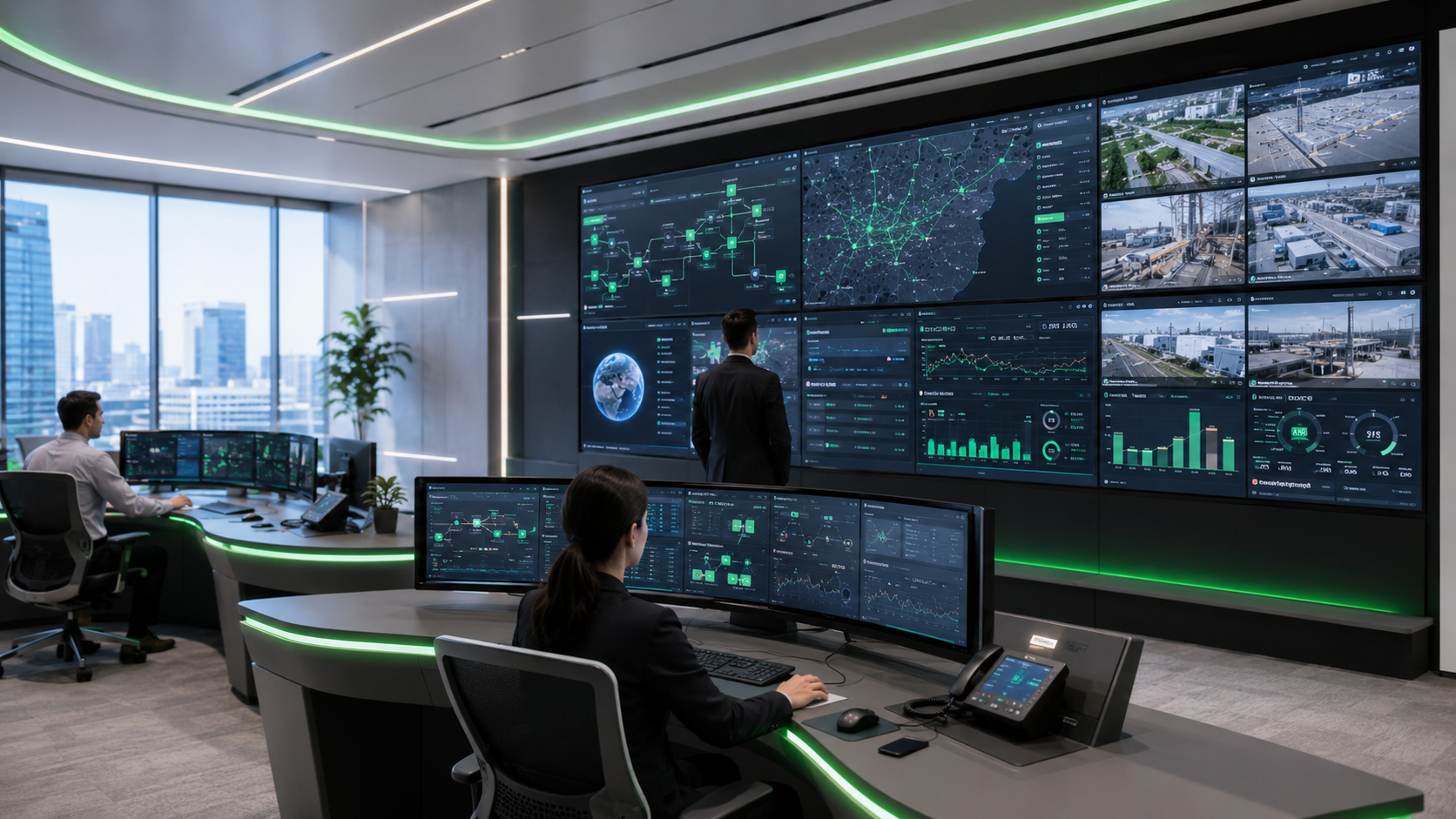
Control rooms are no longer just spaces filled with screens and operators. They are becoming connected decision-making environments where teams need faster visibility, clearer workflows, and systems that support critical operations without adding complexity.
Modern control room solutions are moving toward smarter monitoring, improved visualization, secure system integration, and more operator-focused design. From AI-supported alerts and predictive insights to ergonomic consoles, high-resolution displays, and resilient AV infrastructure, the future of control rooms is being shaped around both technology and the people who depend on it.
So, what should organizations consider when planning or upgrading their control room systems? Let’s explore the key shifts shaping the next generation of control rooms.
The Shifting Landscape of Control Rooms
Modern control rooms are changing because the environments they support are becoming more complex. Operators are expected to monitor more systems, process more information, and respond faster across sectors such as security, transportation, utilities, energy, public safety, and critical infrastructure.
This shift is increasing the need for clearer visualization, stronger system integration, and more flexible control room design. Technologies such as AV over IP, unified communication platforms, control room video walls, and integrated operator workstations can help teams access and share information more efficiently.
At the same time, modern consoles are no longer just furniture pieces. They are part of the wider control room environment, supporting operator comfort, equipment access, cable management, display positioning, and long-term operational continuity.
Key Trends Shaping Modern Control Room Solutions
When organizations plan or upgrade control room solutions, the focus should not be on adding more technology for its own sake. The real goal is to create an environment where operators can see critical information clearly, respond faster, and work with systems that support their decisions.
Several trends are shaping this shift:
- Advanced visualization: High-resolution displays and control room video walls help operators view complex information more clearly and maintain situational awareness.
- AV over IP and unified platforms: Network-based AV distribution, content sharing, and unified communication tools can make it easier for teams to collaborate across on-site and remote environments.
- Ergonomic console design: Adjustable consoles, monitor arms, lighting, and operator-focused layouts can help reduce fatigue during long shifts.
- AI-supported monitoring: AI can support anomaly detection, predictive alerts, and prioritization, helping operators focus on events that need attention.
- Secure system integration: Access control, cybersecurity planning, and resilient infrastructure are essential in mission-critical control rooms.
- Flexible and scalable layouts: Modular consoles, KVM access, and adaptable workstations help control rooms evolve as systems, teams, and operational needs change.
- Sustainable design choices: Durable materials, energy-efficient systems, and long-term equipment planning can support more responsible control room design.
Smarter Control Room Operations with AI and Data
AI can support control room operations by helping teams detect patterns, identify anomalies, and prioritize alerts more effectively. In environments where operators manage large volumes of real-time information, these capabilities can help reduce noise and support faster decision-making.
The value of AI is not in replacing operators but in giving them clearer insights and better context. When integrated properly with the wider control room system, AI-supported tools can help teams move from reactive monitoring toward more proactive operations.
The Role of Immersive Technologies in Control Rooms
Immersive technologies such as AR and VR may create new possibilities for training, simulation, remote support, and scenario planning in control room environments. Instead of overwhelming operators with more screens or data, these tools can help present information in a more visual and contextual way when the use case is clear.
For most organizations, immersive technologies should be considered as an additional layer, not the foundation of the control room. Their value depends on the operational need, the selected systems, and how well they integrate with existing workflows.
Human-Centered and Sustainable Control Room Design
The future of control room design is not only about smarter systems. It is also about creating environments that support the people who work under pressure for long hours.
Operator-focused design considers console height, screen positioning, seating, lighting, acoustics, air quality, and the overall room layout. These elements can help reduce fatigue, support concentration, and make daily operations more comfortable and efficient.
Sustainability also plays a growing role in control room planning. Durable materials, energy-efficient systems, responsible furniture choices, and long-term equipment planning can help organizations build control rooms that are more reliable, easier to maintain, and better prepared for future needs.
Key Design Elements That Modern Control Rooms Need
Modular and Flexible Console Design
Modern control rooms need workstations that can adapt to changing technologies, workflows, and team requirements. Modular console layouts, adjustable monitor arms, cable management, and flexible equipment access can make upgrades and maintenance easier over time.
Advanced Visualization
Clear visualization remains one of the most important parts of any control room. High-resolution displays, control room video walls, curved displays, and carefully planned viewing angles can help operators monitor information more effectively without overwhelming the workspace.
Reliable AV and System Integration
A control room depends on more than individual screens or consoles. Audio, video, data sources, KVM access, networking, control systems, and operator workstations all need to work together as one reliable environment. This is where control room AV integration solutions become essential.
Sustainability and Long-Term Value
Sustainable control room design is not only about materials. It also includes durability, energy efficiency, serviceability, and the ability to scale or upgrade systems without rebuilding the entire room. Long-term planning helps organizations protect their investment and keep the space ready for future operational needs.
What’s Next for Control Rooms?
The future of control rooms will be shaped by smarter systems, stronger visualization, secure integration, and more human-centered design. As operations become more connected and data-driven, organizations will need environments that help teams move from reactive monitoring to faster, better-informed decision-making.
However, future-ready control rooms are not built by adding technology randomly. They require careful planning, the right display and console setup, secure AV and ICT integration, and ongoing support to keep systems performing reliably.
At Maktabi Tech, we help organizations design, integrate, and support control room solutions that fit their operational needs. From visualization systems and operator consoles to AV infrastructure, system integration, installation, maintenance, and post-installation support, our team works to create control rooms built for clarity, resilience, and long-term performance.
Talk to our team to explore the right control room solution for your space.
WANT TO MOVE TO
THE NEXT LEVEL?
Ready to build an innovation hub that reflects your vision? Let’s create an experience where ideas are not just presented, but truly experienced.